HANDLOOM STORY
What is a Saree? History and Cultural Importance
About Our Collection
Our collection is really special because it has a lot of history behind it. A saree is more than something you wear. It is a part of who you are, a way to celebrate and something to pass down to your family. We have a lot of sarees that people made by hand. We got them from parts of India. We have Banarasi silks, cool Chanderi cottons, shiny Kanjivaram sarees and colorful Bandhani sarees. You can wear a saree for a wedding a festival or just because you want to look nice. We have a saree that’s perfect, for you.
Styling tips from our saree experts
Pair heavy silk sarees with a contrast-colour blouse to make the border pop
Chanderi and cotton sarees drape best with a light petticoat — never a stiff one
Use a small safety pin at the shoulder to keep pleats neat all day
For weddings, pre-drape and stitch pleats the night before for a stress-free morning
Store silk sarees in muslin cloth — never in plastic — to let the fabric breathe
I have a blog page for your saree business. This blog page has a lot of features. It has a picture at the top with the name of your saree business and a line that says what your business is about. The blog page also has six saree collections. These saree collections are Banarasi Silk, Kanjivaram, Chanderi, Bandhani, Sambalpuri Ikat and Tant Cotton. Each of these saree collections has information about where they come from and what they’re like. They also have a badge. There is a guide to help people choose the saree for different occasions. For example the guide can help people choose a saree for a wedding or a festival or for work or for an event or for a night out. The blog page also has a section with tips on how to style a saree. These tips are from someone who knows a lot, about sarees. At the bottom of the blog page there is a section that tells people what to do like visit your website or store to buy a saree
The Saree Across India's Diversity
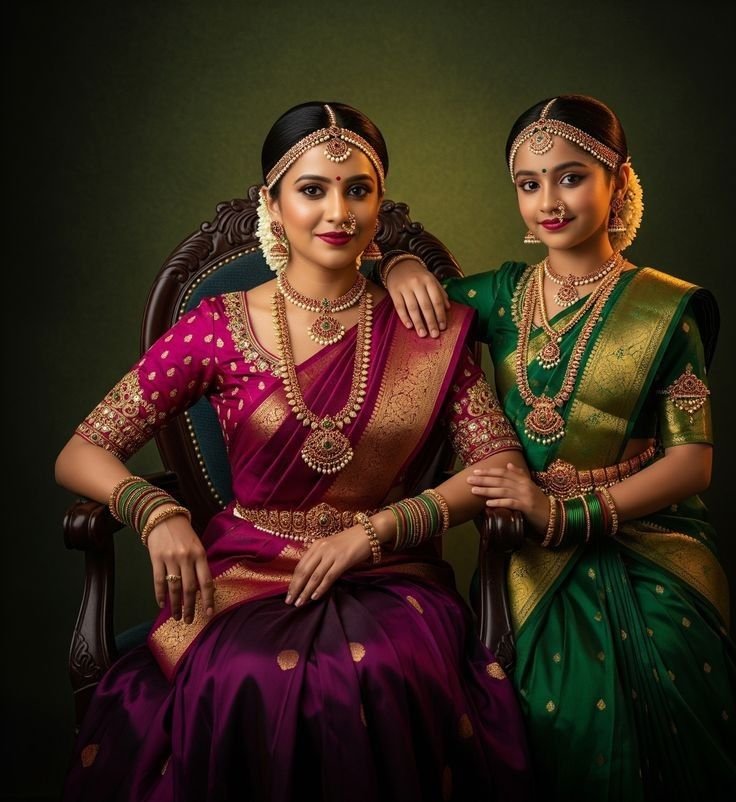
There is no single way to wear or weave a saree. Every state, every community, every occasion has its own variation. The Nivi drape from Andhra Pradesh became the “standard” style through Bollywood, but there are over 100 documented regional draping styles — from the Kodagu drape of Karnataka to the Madisar worn by Tamil Brahmin women weddings
Behind every handloom saree is a weaver who wakes up before dawn, sits at a loom, and pours hours of skill into every inch of fabric. When you buy a handloom saree, you are not just buying clothing — you are supporting a family, preserving a centuries-old art form, and wearing a piece of living history.